
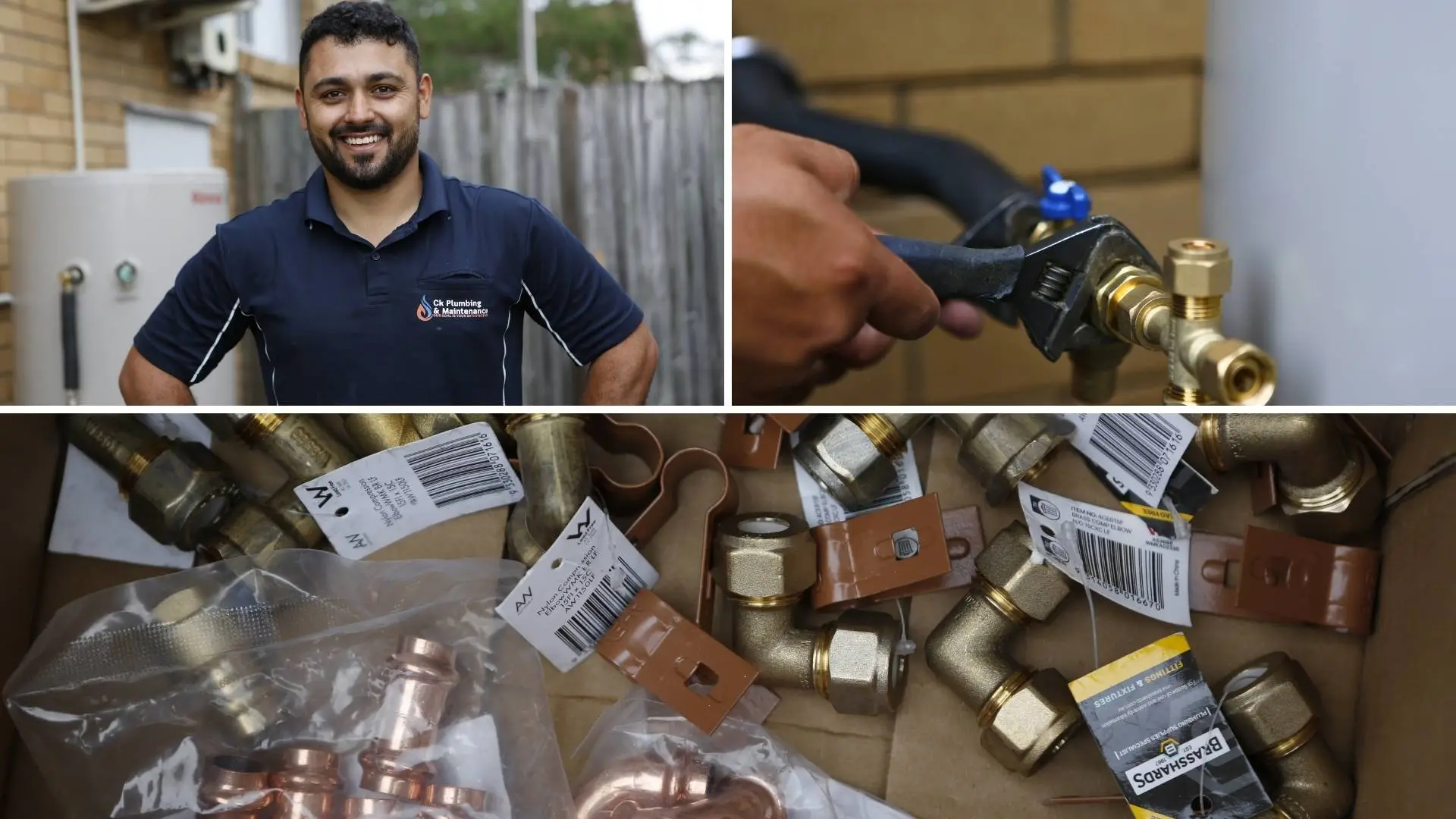
A small drip from your hot water relief valve is usually normal. But leaks from the tank body, corroded fittings or damaged pipework can indicate serious failure. Turn off the water and power, check where the leak originates, and contact a licensed plumber immediately if the tank itself is leaking.
Hot water system leaking? Valve drips are normal, but tank leaks are emergencies. Here’s what you can safely check before calling a Brisbane plumber.
You’ll Learn:
Some leaks are minor and part of normal operation. Others can indicate system failure or create safety risks.
These issues often relate to pressure changes or worn valves.
If you see any of these, turn off the system immediately and call us.
Our emergency plumber Brisbane team can help prevent further damage.
Hot water system leaks usually fall into one of these categories:
The temperature and pressure (T&P) relief valve is built to release small amounts of water to regulate pressure.
Normal behaviour:
Not normal:
A faulty T&P valve can be replaced without installing a new system.This is considered a standard hot water repair.
These leaks commonly appear around:
These issues are often repairable if the tank body is still in good condition.
We check for:
If your system is older and repairs are starting to become frequent, many homeowners take this opportunity to upgrade to a more efficient system — especially an instant (continuous flow) unit. Our guide on instant hot water systems breaks down why instant systems are a popular replacement choice when storage tanks start leaking or failing.
If water is coming from:
…then the tank has failed internally.
This cannot be repaired and requires replacement.
Continuing to use a tank that is leaking from the body may lead to:
If this happens, turn the system off and call a licensed plumber immediately.
See our guide about repair or replace and when to upgrade your old hot water unit.
If you have:
…your system may have an internal failure or electrical issue.
Check our troubleshooting guide on 7 quick checks before you panic. If the issue continues, contact us for assessment.
Here are safe steps you can take before we arrive.
Locate the isolation valve on the cold-water inlet pipe. Turn it clockwise until it stops.
This stops the tank from refilling and limits further leaking.
For electric systems:
Switch OFF the hot water circuit breaker in your switchboard.
For gas systems:
Turn the gas isolation valve to OFF (usually located near the bottom of the unit).
Turning the system off prevents:
This helps diagnose the issue faster.
Look for:
Avoid touching any electrical parts.
Move boxes, storage items, or anything that could be damaged by water.
If the leak is from the tank body or you can’t determine the source, contact us immediately.
Our hot water installation Brisbane team responds quickly to urgent failures and can arrange timely replacement when needed.
You can safely check or do these steps:
Do NOT attempt:
Hot water systems involve pressurised water, electricity and sometimes gas — a dangerous combination without proper training.
We always assess whether a repair is safe and practical before recommending a replacement.
A repair often saves money and prevents unnecessary work.
Repairable leaks include:
If the tank body is still in good structural condition, a hot water repair is often all you need.
A full replacement is required when:
In these situations, the safest solution is installing a new:
For price guide, check our post about hot water system prices in Brisbane.
Tanks corrode internally over time, especially older models.
Some Brisbane homes have higher pressure, which can stress ageing tanks.
Old, corroded or seized valves can leak excessively.
Incorrect fittings or connections may cause leaks years later.
Hard water slowly wears down tank linings and fittings.
Overheating can trigger excess pressure and lead to leaks.
Our job is to identify the cause and ensure your next system operates safely and lasts longer.
A few simple maintenance steps help keep your hot water system running safely and efficiently:
Helps prevent dangerous pressure build-up.
Good airflow is especially important for gas systems.
An annual check can pick up small issues before they become major failures.
Valve replacements cost far less than replacing a full tank.
Undersized units work harder and wear out faster — this is where proper hot water installation Brisbane advice makes a big difference.
If your hot water system is leaking — even slightly — it’s important to have it inspected before it becomes a full failure.
Call us now, we offer fast response, urgent assistance and clear guidance, so you can get your hot water restored safely and efficiently.
Yes — small drips are normal during heating cycles.
Constant flow or heavy discharge is not normal.
This usually means internal tank failure.
A replacement is required.
No. Tank body leaks cannot be repaired — only valves, fittings and connections can be repaired.
Most replacements take 1.5–3 hours, depending on the system type and installation layout.
Yes. Our emergency plumber Brisbane team can handle urgent hot water failures and safety concerns.
If you suspect a hidden leak, turn off your water supply and call a licensed plumber.
At CK Plumbing, we provide same-day leak detection and repairs across Holland Park, Mount Gravatt, Coorparoo, and Brisbane’s Southside.
CK Plumbing helps Brisbane homeowners find and fix hidden water leaks — saving thousands of litres and preventing costly property damage.